Category Archives: Meat

Part II: The Meat

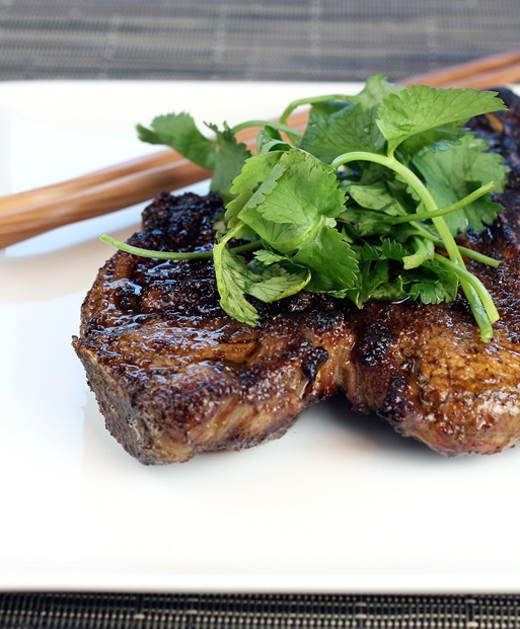
Juicy, tender lamb with the flavor of Madras curry.

Did you know that most Americans eat little to no lamb? Indeed, only 0.7 pounds of lamb are consumed per capita here each year, according to the U.S. Dept. of Agriculture.

More’s the pity, since lamb is one of the most succulent and flavorful meats around.

Don’t take my word for it. Try it in this dish of “Lamb Shoulder Steak with Japanese Curry Oil.” The recipe is from “The Japanese Grill” (Ten Speed Press) by Tadashi Ono, executive chef of Matsuri in New York, and food writer Harris Salat. It’s also a perfect accompaniment to the duo’s “Romaine Hearts with Miso-Mustard Dressing,” which I spotlighted the other day.

Read more

Gourmet Jerky, Cookbook Recipes Finder & Curtis Stone

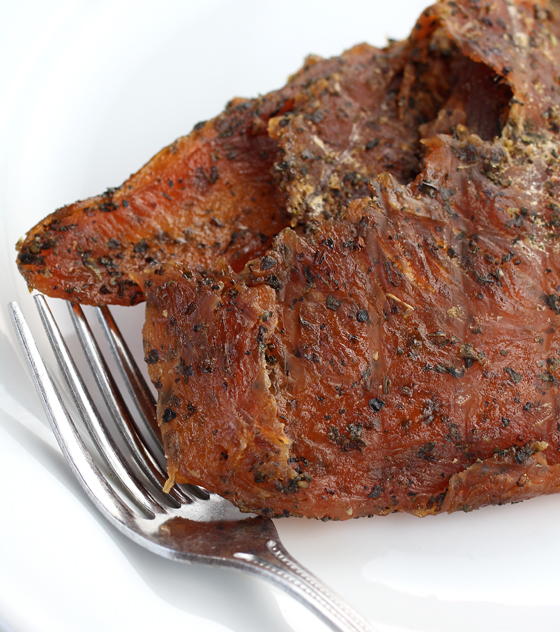
Krave's Basil Citrus Turkey jerky.

Craving Krave Jerky

When you think of jerky, no doubt it’s of those jaw-breaking, tough as shoe-leather strips sold at convenience stores and gas stations that you reach for only in desperation.

Now comes Krave Jerky, which is jerky you’ll actually want to eat.

The company was launched a year ago by Jens Hoj, former general manager of El Dorado Kitchen in Sonoma, and Jonathan Sebastiani, a winemaker whose family started Viansa Winery in Sonoma.

What sets these gourmet jerky products apart is that they’re actually tender, soft, moist and even sticky with marinade. They’re so meaty tasting that you almost feel like you might need a knife and fork to eat them. But rest assured, fingers work just fine.

The jerky comes in eight varieties, including Lemon Garlic Turkey, Sweet Chipotle Beef, and Grilled Sweet Teriyaki Pork. The Teriyaki Pork is the most tender of the bunch, with a candied-salty flavor of  a perfect Hawaiian plate lunch.

The Basil Citrus Turkey is the most toothsome of the bunch with a mild tang. Surprisingly, it also boasts the most calories at 100 per 1 ounce serving, compared to the 70-80 calories of the others. It also has the most sodium at 610 mg per serving, compared to the 140-400 mg of the others. But the turkey has 0 grams of fat, compared to 1.5-2.5 for the other flavors.
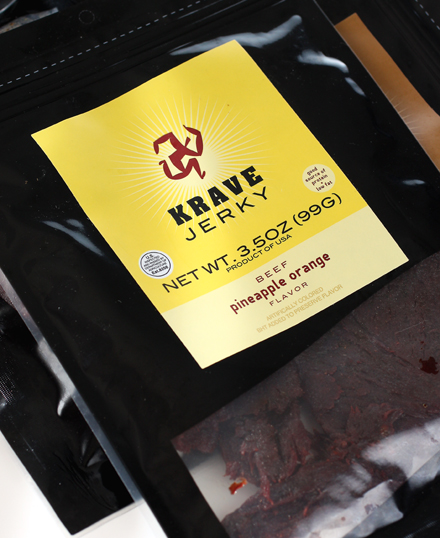
Jerky that actually won't hurt your jaw.

A 3.5-ounce package is $7.

But starting today, for a limited time only, Daily Gourmet is offering a deal on Krave Jerky. The new San Francisco-based company offers gourmet food products in special discounts for limited time offers to members, who are notified via email. Among the products that have been offered or will be are jams and vinegars from The Girl and the Fig in Sonoma, and vegan cinnamon rolls by Berkeley’s Cinnaholic.

A five-pack of Krave Jerky will be $28 (includes shipping) on Daily Gourmet.

The company was started by David Rangel, formerly with Microsoft’s Corporate Strategy Group and an executive at Groupon; and Chad Jackson, a software and Internet entrepreneur.

CookBookKarma for Cookbook Aficionados

If you love to cook from cookbooks, take photos of your dishes and post the results on your blog, you’ll be glad to discover the new site, CookBookKarma.

Read more

High on the Ham

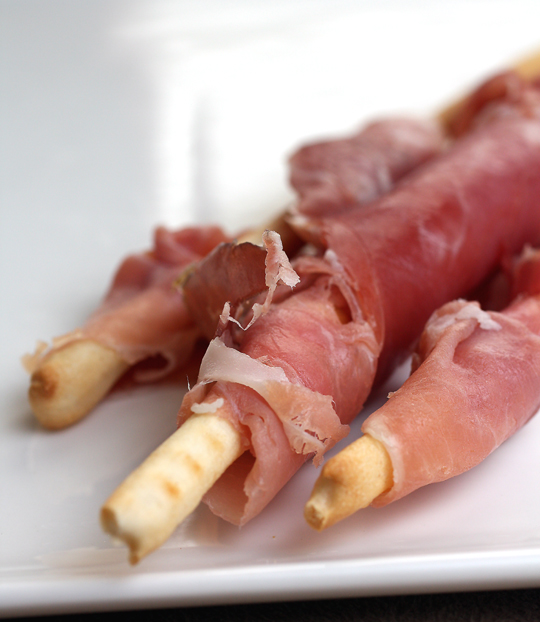
Newsom's prosciutto that's been aged for 15 months.

There is ham. And then there are Newsom’s Country Hams of Princeton, KY.

After all, a family that has been curing hams the traditional way since the 1600s is sure to have the method down pat. Even now, this salt and brown sugar-method has changed little since the family first started selling the cured, slow-aged hams at its Newsom’s Old Mill Store in 1917.

Today, it remains the smallest national ham curing business in the country, and one of the few — if not only — to use this old-fashioned method born of necessity when refrigeration had not yet been invented. The process of making these hams takes about a year. Each ham is hand-rubbed, then allowed to cure for a month or so, before being smoked for days on end. Then, the hams are hung again in the smokehouse for months to develop their intense flavor. After about 10 months, the hams are ready. After 11 to 15 months, the prosciutto is done.

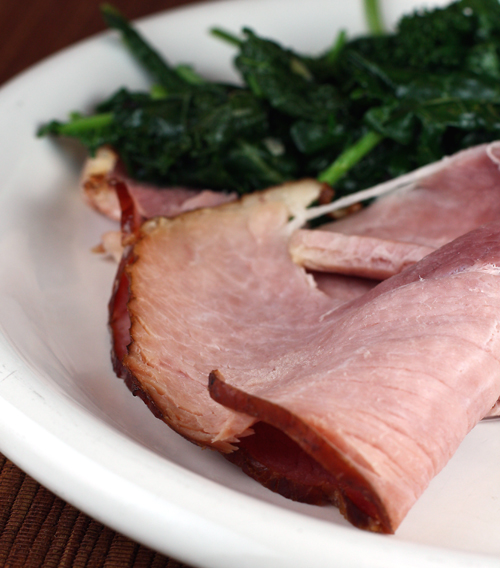
Newsom's Smoky BBQ Ham

“We use old -fashioned methods of using just the salt and brown sugar, and hickory smoke smoldering out of an old iron kettle which fills the whole room from just one small fire, damped with green hickory saw dust,” says owner Nancy Newsom Mahaffey (aka The Ham Lady).  “We smoke for weeks off and on depending on the weather.  We are the last to still do an ambient weather curing process of circulating outdoor weather in and around our hams for the full duration of time from the time they are out of salt as the spring is warming, going through the hot, dog days of summer, and into the fall when they are finally ready for sale.  In fact, our process was born before nitrates and nitrites were even discovered.”

When illustrious chef and food writer James Beard stumbled upon the store in 1975, he was so floored by the flavor of the hams that he went on to use them in his cooking classes and to promote their attributes in his writings. As word spread about these hams, Newsom’s started its mail-order business in 1975 to keep up with the increased demand.

Read more

Getting Acquainted with Goat

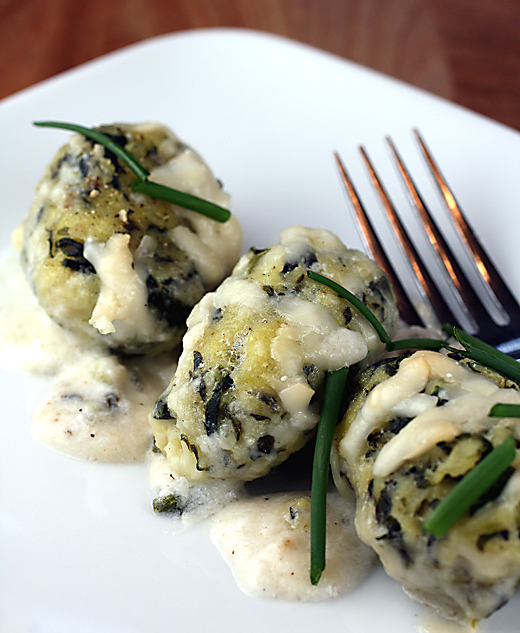
Fluffy dumplings made with goat  milk, goat butter and two types of goat cheese.

Seventy percent of the red meat eaten around the world is not cow, nor pig, nor lamb. Would you believe it’s goat?

Yet for most of us in the United States, goat merely brings to mind a creamy chevre, and little else.

The prolific food writing duo of Bruce Weinstein and Mark Scarbrough are hoping to rectify that. Their latest cookbook is “Goat: Milk, Meat, Cheese” (Stewart, Tabori & Chang), of which I recently received a review copy. This comprehensive book includes a wealth of information about all things goat, as well as recipes that include “Goat Shanks with Cabbage, Port, and Vanilla,” “Chilled Blueberry Tzatsiki Soup” made with goat yogurt, and “Goat Cheese Brownies.”

They realize that a lot of folks are predisposed to hate goat meat, even if they may never have tried it. So many people fear it’ll be too barnyard-y or funky tasting. But goats that are slaughtered between six and nine months possess none of that. Instead, the meat is slightly earthy and quite tender. Ounce per ounce, goat is also lower in calories, fat and cholesterol than chicken, beef, pork or lamb.

Latin chefs have had a love affair with goat for generations. Nowadays, more and more chefs are discovering how fabulous the meat is and even spotlighting it on pricey tasting menus.

Read more

Meaty Memories

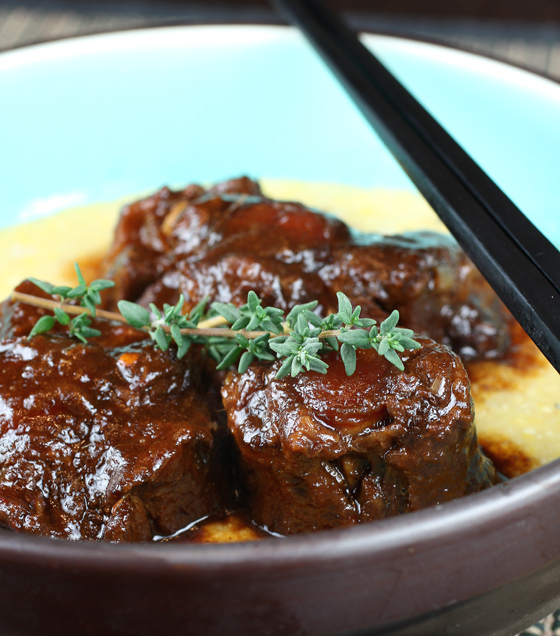
My Dad taught me to love this unconventional cut of beef.

Oxtails.

The name alone may make some people blanch.

But to me, the tail never fails to get me in the heart.

You see, oxtails were the very last dish that I cooked for my Dad before he passed away. And so, they always make me think of him.

He’s the one who taught me true appreciation for this once-shunned, once-inexpensive cut that has such brazen beefiness.

If you like short ribs, you’re sure to go crazy for oxtails, which cook up even more tender with even more profound flavor. You can find them easily in the butcher case of Asian markets.

Sure, there’s more cartilage and bone in oxtails. But that’s what adds to their flavor and makes eating them such messy fun.

My Dad would cook up a cavernous pot on weekends, simmering the cut-up oxtails with star anise, soy sauce and ginger in a brothy cross between a soup and a stew. He’d throw in carrots and turnips, then let the pot simmer for hours until the meat was as tender as can be.

Then, he’d ladle big scoops of it into flat bowls filled with fluffy steamed rice, with the grains absorbing the aromatic broth so perfectly.

Read more

« Older Entries Recent Entries »